What did one latte cost us?
3 days before opening · 11 Nov 2026 · Michele Memoli, café owner · 2 min read
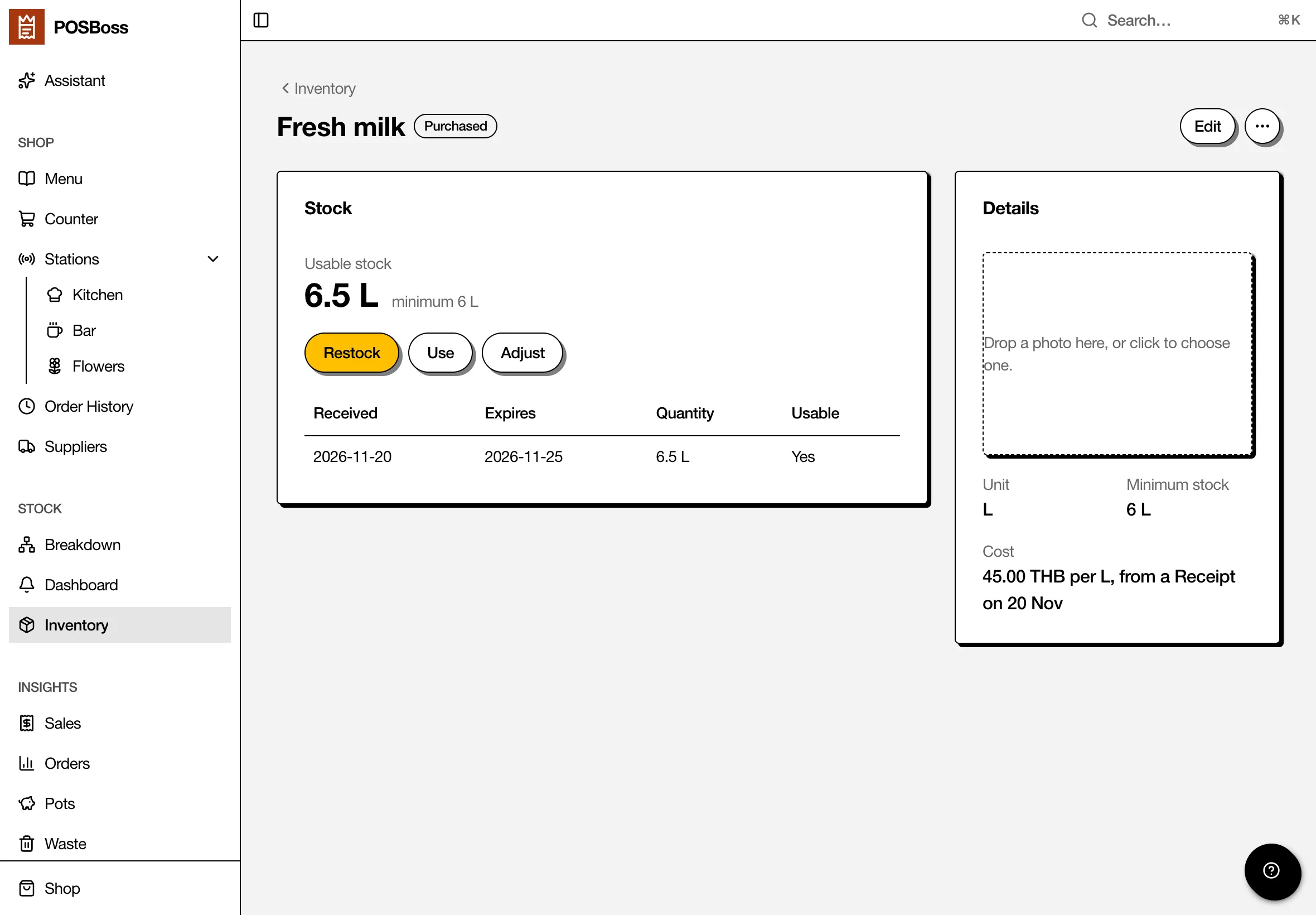
We were three days from opening, and I kept coming back to one question: what did it cost us to make a latte?
Without that, what we charged and what we pushed came down to feel. I could see what sold. I could not see what each drink earned, and the two were not the same thing.
One drink, worked out from its Recipe
A latte took milk and coffee beans. We did not type a separate cost for the drink. We recorded what its ingredients cost, and the latte's cost followed from its Recipe: each ingredient's amount times its cost per unit, added up, divided by what the Recipe made.
An ingredient's cost came from one of two places. Either we typed what a pack cost and how much it held, or we recorded what we paid when stock came in. If we had both, the newer one won. The Item page said which it used: typed on a date, from a Receipt, or from its Recipe.
If one ingredient had no cost yet, the drink had no cost either. That was on purpose. A cost with a hole in it looked like an answer and was not one.
Something we sold on consignment from a local roaster was simpler. Its cost to us was what we owed the roaster for it: the price less the commission.
What the matrix does with it
Once Orders came in, the Orders page could place every Menu entry on a chart. One side was what an entry earned us each time we sold it: the average price it sold at, less what one sale cost. The other was how much of what we sold it made up.
Cut the chart in two ways and each entry fell in one of four boxes:
- Star: earned well and sold well.
- Plow horse: sold well, earned less.
- Puzzle: earned well, sold less.
- Dog: neither.
The matrix did not tell us what to do. It showed which entries sat where, so we could decide what to keep, reprice, push or drop.
Entries with no cost were not hidden. They were listed under the chart as "No cost yet", and each named the ingredient holding it back, with a link to that Item.